
A Troubled Kingdom of Flowers
by James Duquette
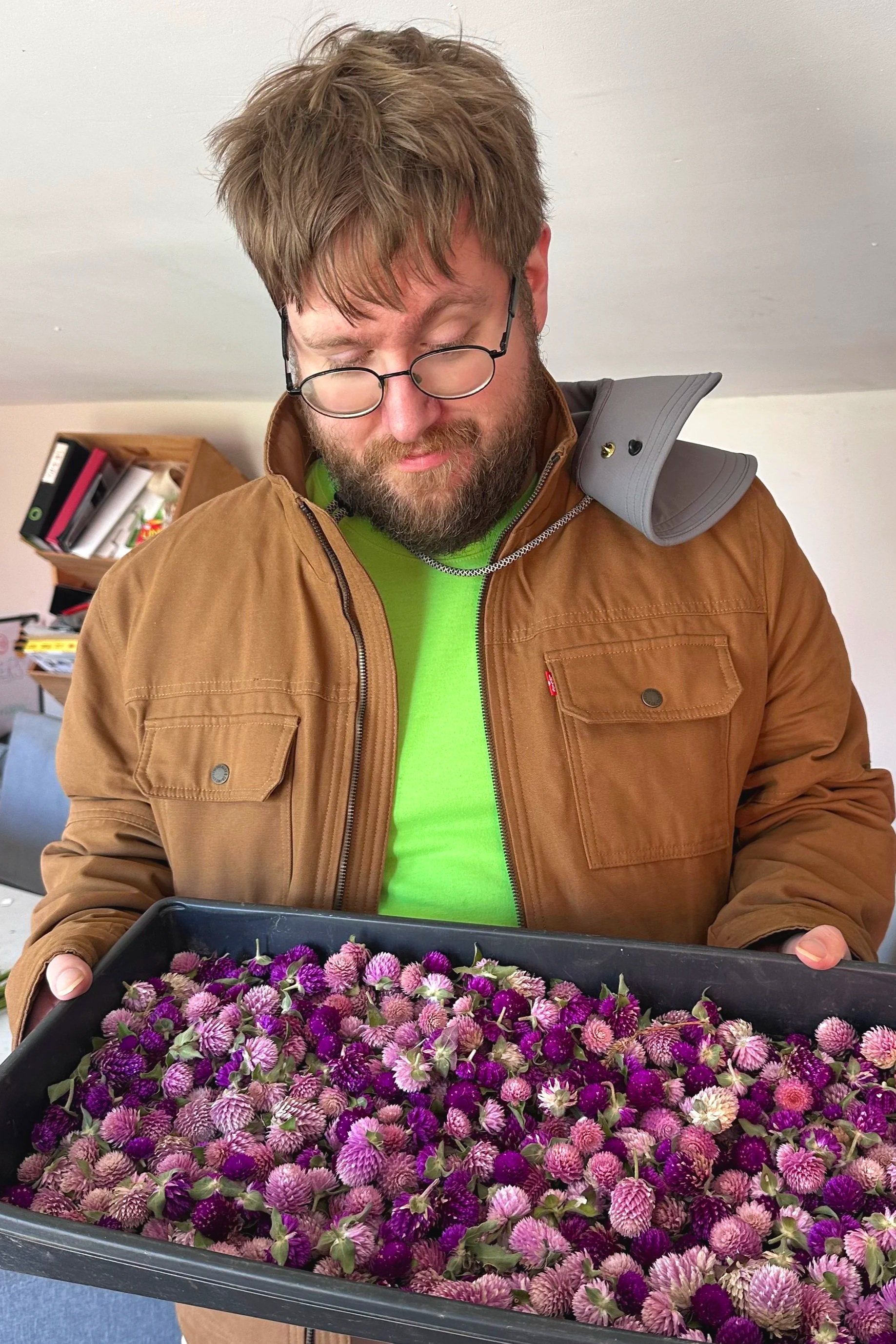
Pondering Gomphrena
The other day, I was introduced to a small flower called Gomphrena. Gomphrena flower heads can be deep pink, purple, red, orange, or white. Though they come in other colors, the one I first encountered was in a shade that might have been called “hot pink” around the year of 2005.
The bloom itself looks vaguely like a disco ball, or a large version of round screw. Close up, the tight spiky petals overlap each other in a spiraling pattern so that, when you zoom out, the final flower is shaped something like a small egg. Below the hot pink mini disco ball are a couple of leaves, and below that is an exceptionally thin and frail stem that splits as if it were an intersection designed by someone who didn’t want drivers to know where they were going.
Gomphrena is not particularly remarkable in its smell; it hardly has one. Nor in its kinetic feel; it’s “spikiness” is maybe a little prickly, but nothing worth noting. No, what makes gomphrena remarkable is how difficult it is. Bothersome. And not nearly as fun as a disco ball.
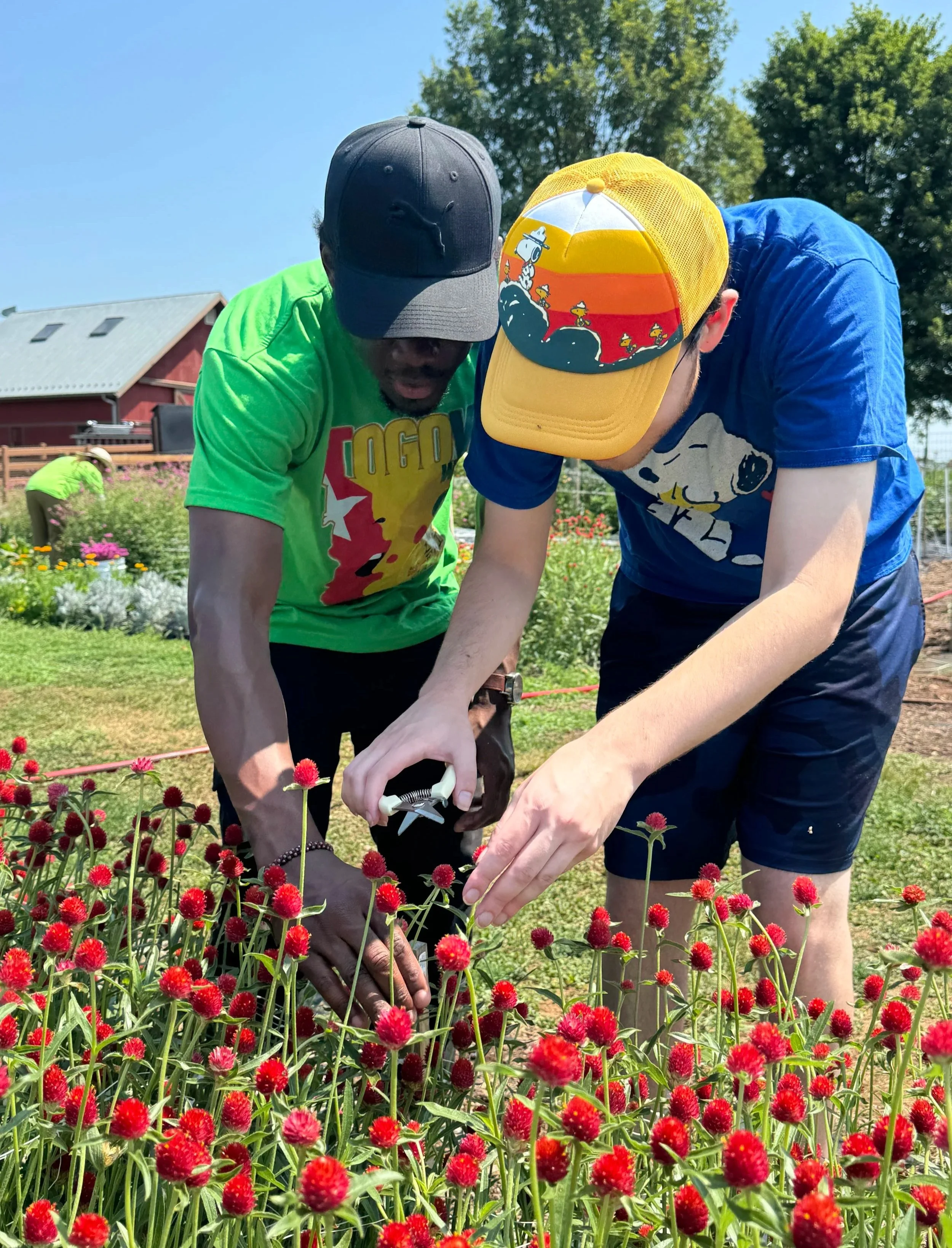
Step One: figuring out where to cut
Harvesting gomphrena is a chore to say the least. In order to get a successful flower, you need a single, unbroken stem line around 12-15 inches (at least) long. The problem is that, unlike many other flowers, gomphrena does not have a one-to-one stem-to-flower ratio. It splits like the bloodline of a medieval king who has had one too many dalliances. The many children of his affairs are left on branches that may or may not end up presentable as a complete flower for use in a bouquet.
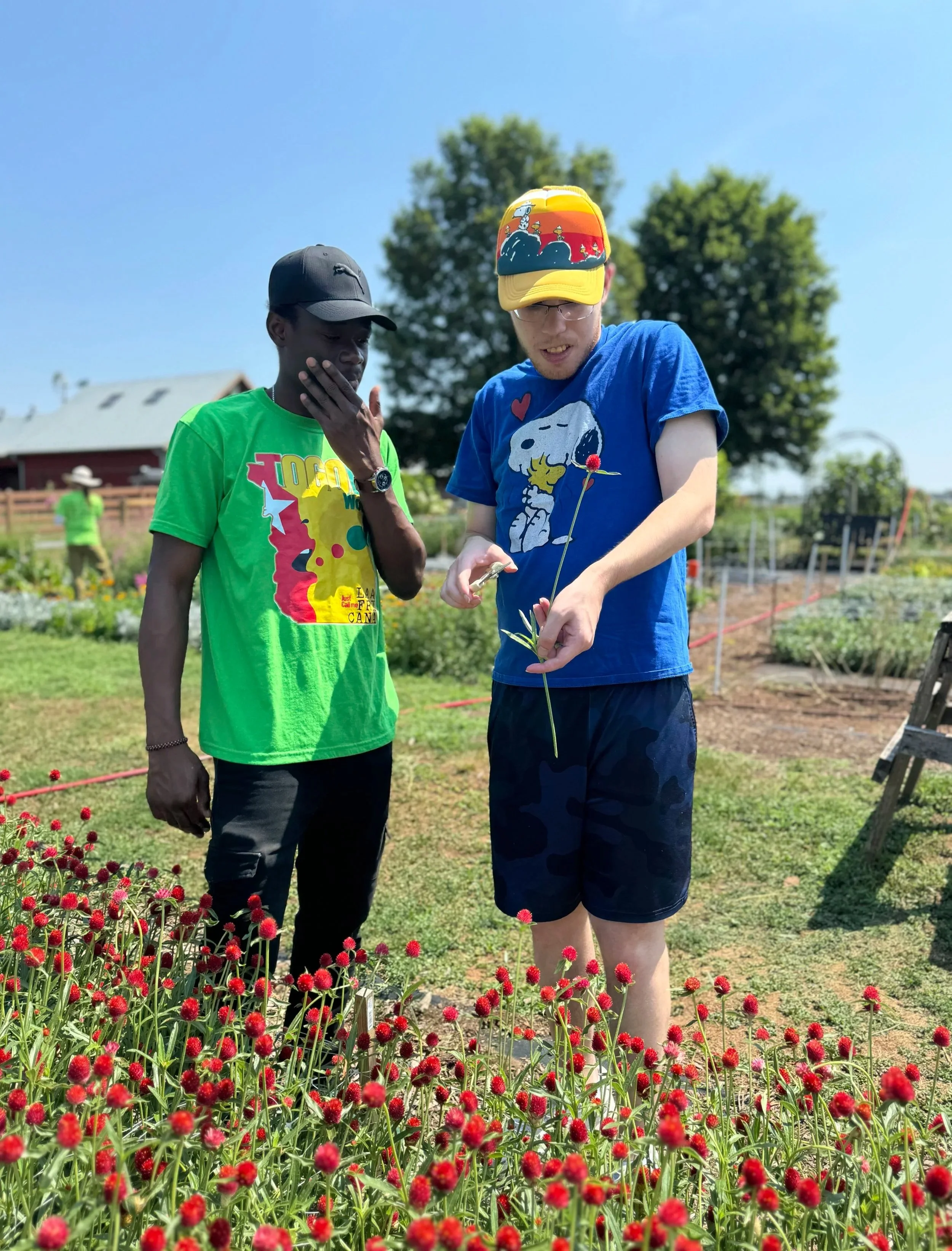
Step two: figuring out what to do with a branched stem
In order to get a proper stem, you have to remove the branches leading to smaller flowers lower down, like the king suggesting that his troublesome relatives take a very long trip to the countryside. They may or may not go easily.
Even if you’re successful, the stem may still not be usable. The stem of a gomphrena flower is fragile and easily knocked askew, leading to a toppled and broken bloodline that puts the entire kingdom at risk. The top half frequently snaps in two while the unwanted relatives remain on the stem.
And even if you do get a complete flower, it may not be big enough or healthy enough to use in a fresh bouquet. Several of the gomphrena I pulled in my first attempt at learning to harvest were runts that had not managed to bloom satisfactorily, not even good enough to use as flower heads for other types of projects.
Choosing gomphrena stems. Photo by Ethan Roe
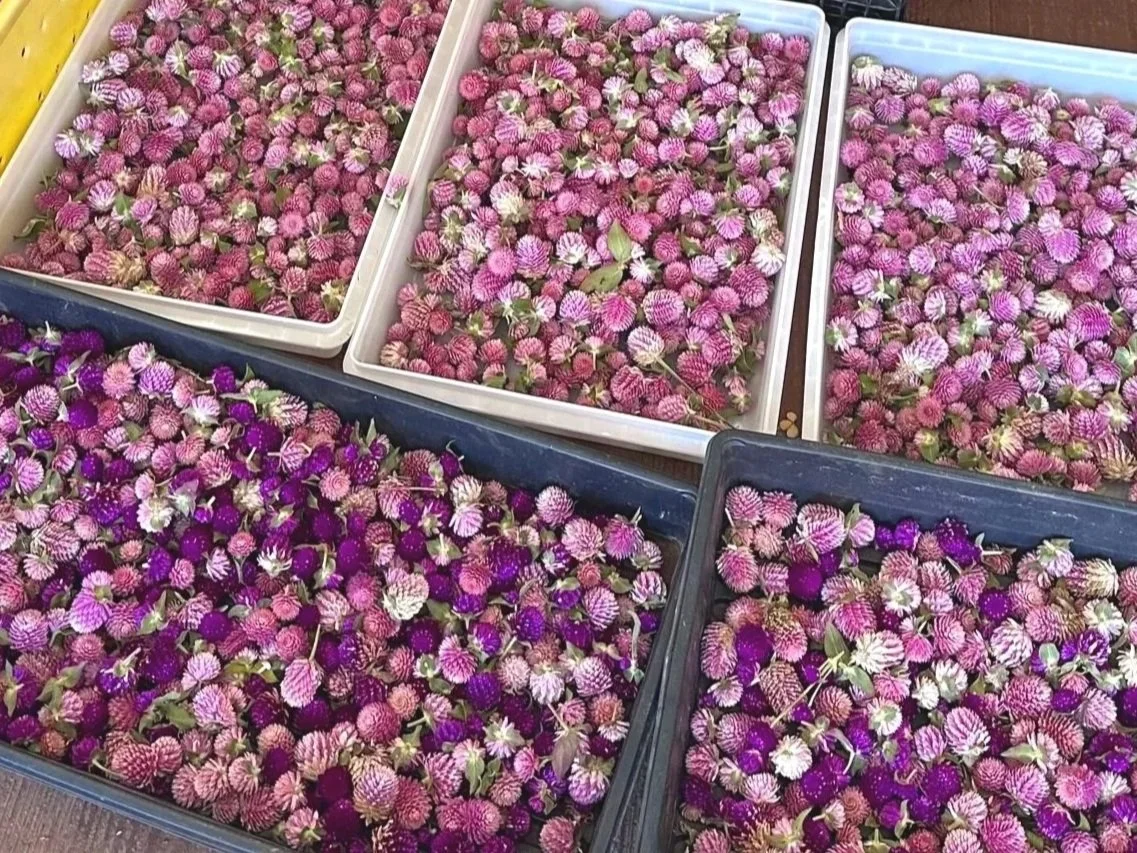
Those other projects were the saving grace of the whole process, however. Even if a flower was unusable for a long-stemmed fresh bouquet, the head could still be saved. We need these small flower heads for our FlowerFetti product (which is just what it sounds like: confetti, but made from our dried flowers). They dry beautifully, holding their hot pink color, and look surprisingly good sitting at the top of the jar. So, even when the stem and leaves were spotted or brown, or the stem snapped from the pressure, I was still able to split off the flowerheads to use for this purpose. By the end of the hour, I had maybe a dozen usable stems. The majority of my personal cuttings ended up as festive accents in the FlowerFetti.
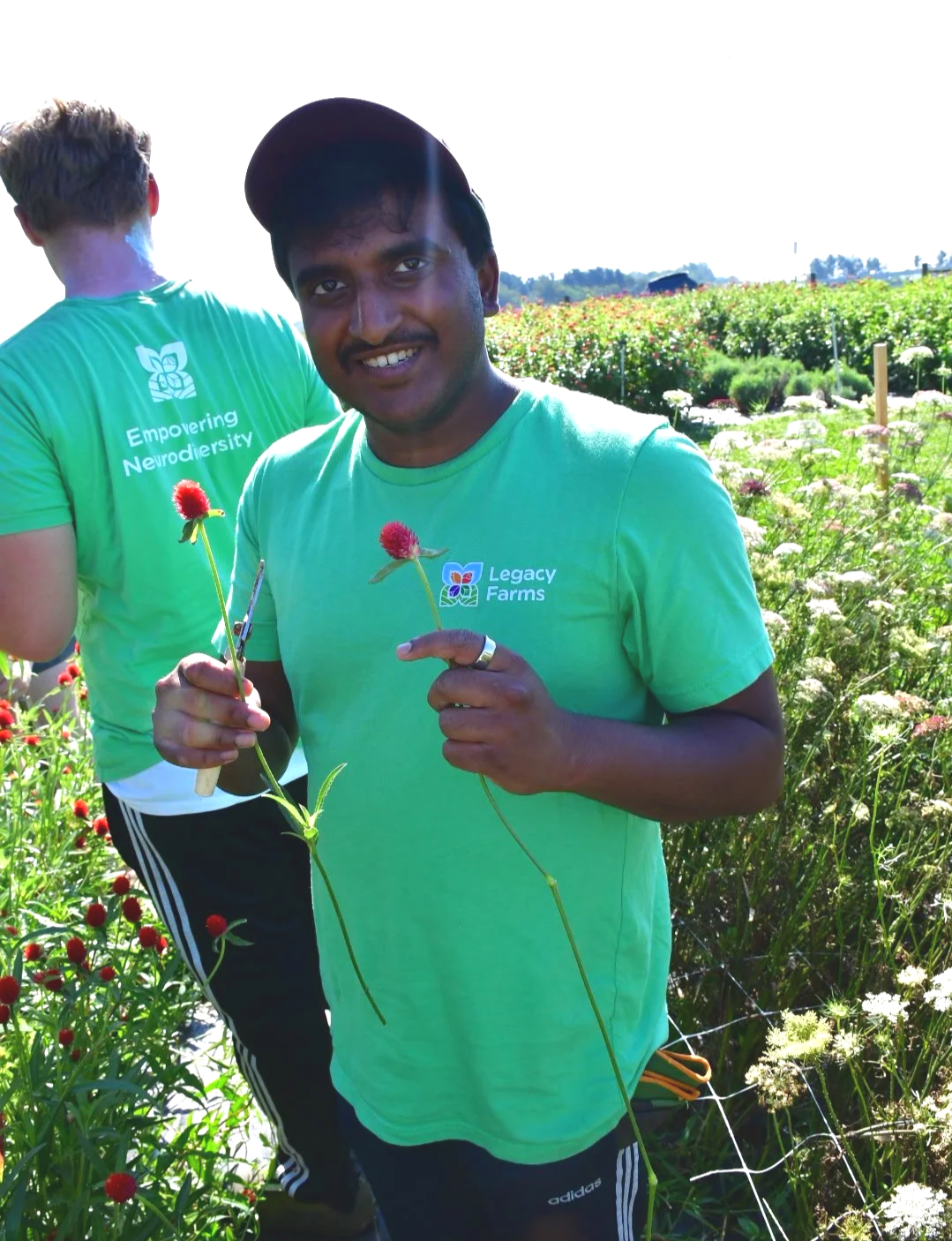
Success! Photo by Ethan Roe
This is just one flower in our gardens–a particularly troublesome flower, yes, as many of my coworkers expressed distaste with the prospect of trying to harvest it–but still, just one. We grow dozens of different varieties here at Legacy, and each has to be cared for with such specific requirements that it’s amazing that we get our work done by the end of the day, or that we reliably finish up to 100 bouquets for customers each week. Not all flowers are as fragile and bothersome as the gomphrena, but everything from tulips to zinnias to celosia presents its own challenge.
At the end of the day, and even after spending over a year at the farm, I still don’t have an idea of how much I have yet to learn. This is truly an apprenticeship in both flowers and writing about flowers. Attempting to process the gomphrena, even for an hour, gives me just a fraction of the experience that our garden apprentices, mentors, and floral staff are working with every day.
Fortunately a little gomphrena goes a long way in a fresh bouquet. And as it turns out, those little pink disco balls take center stage as their own sort of royalty in our dried FlowerFetti product.
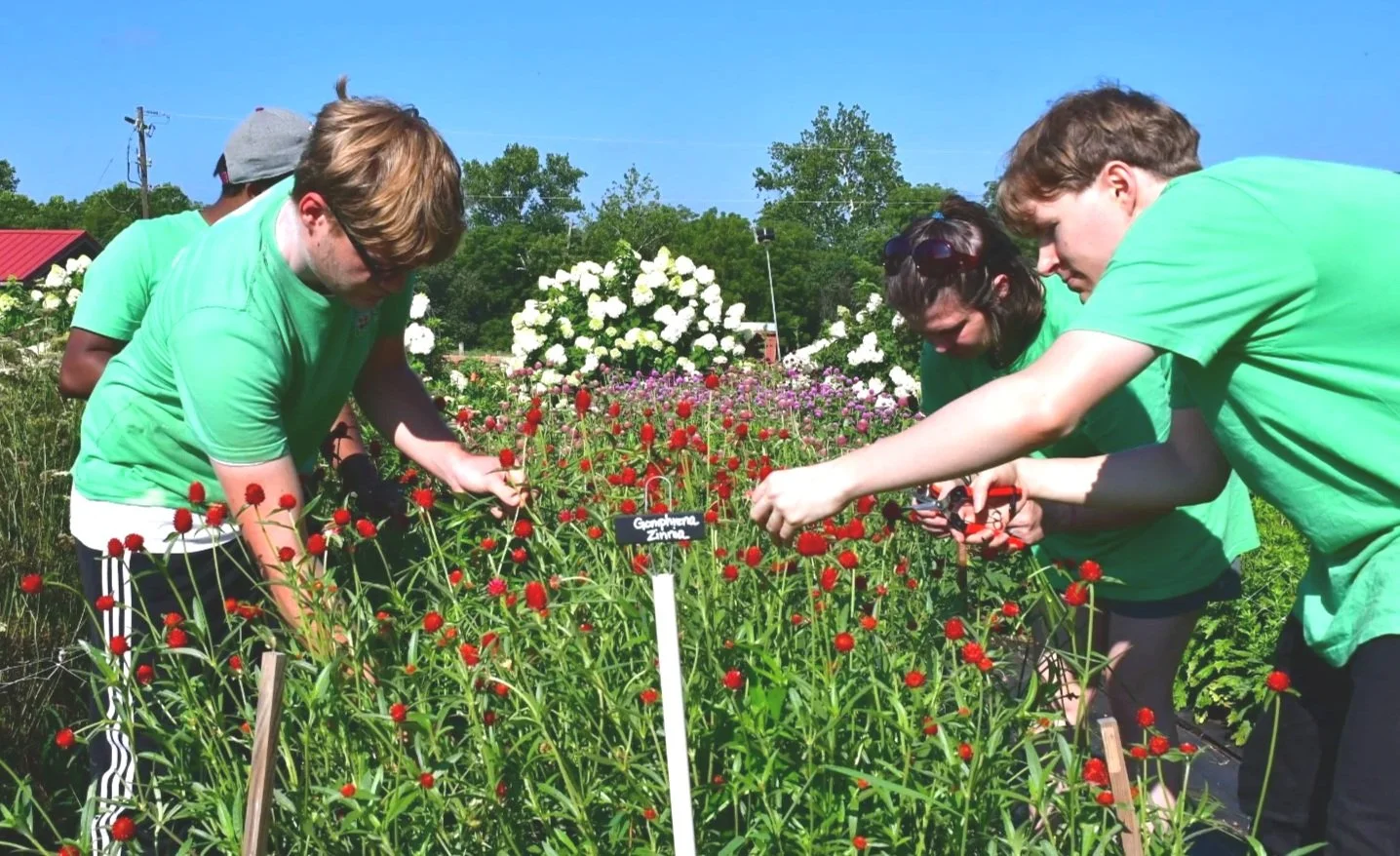
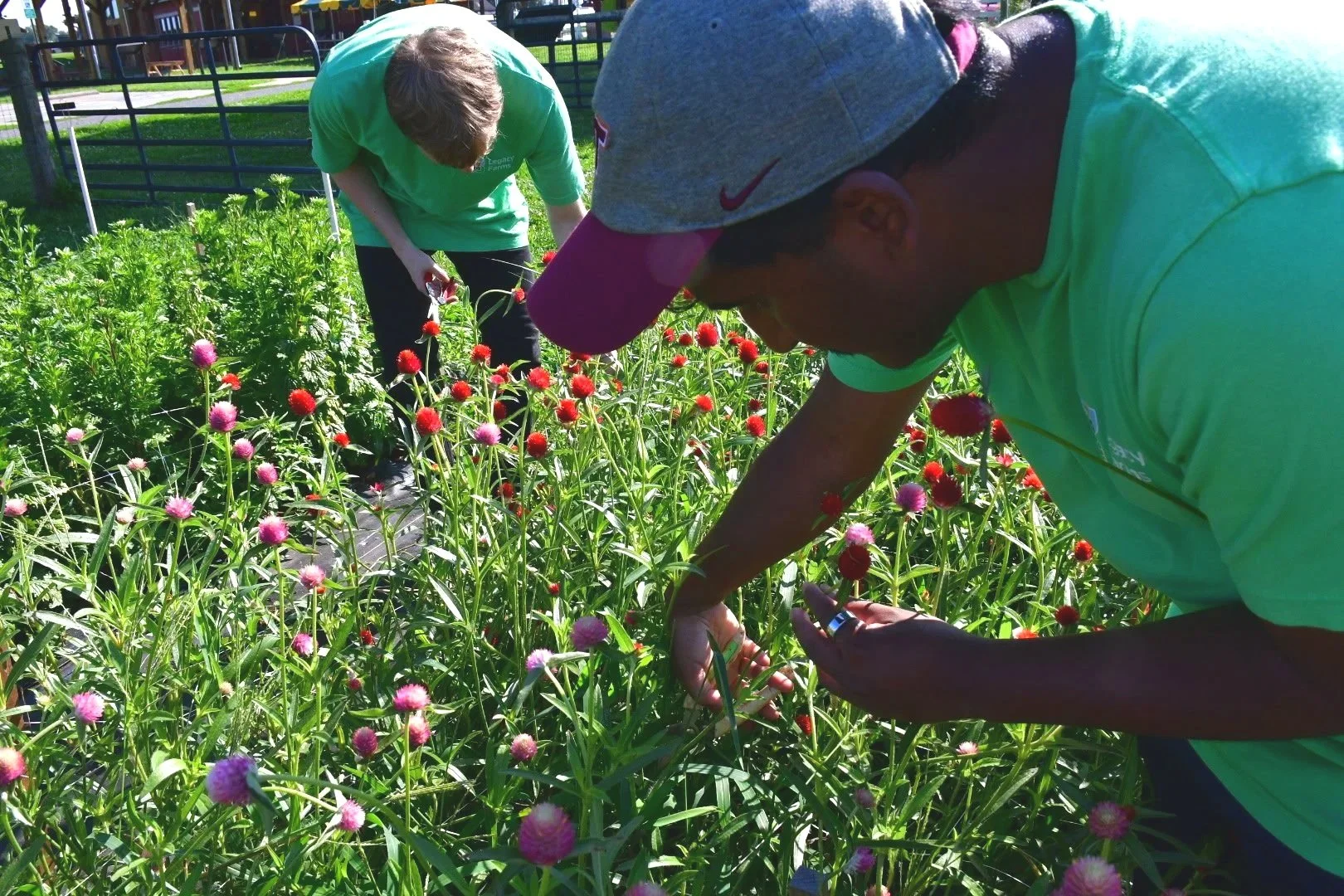
Gomphrena is a group project. Photo by Ethan Roe