
Speaking of Planting
by James Duquette
I’ve never had problems speaking in front of crowds. Many people apparently do; it’s why the term “stage fright” is widespread. But me? It’s hardly difficult. Making small talk on the other hand, especially with people I don’t know, is much more challenging. I never feel like I know what to say.
Casual conversation is more difficult as a neurodivergent person; my autism makes it harder for me to adapt to unfamiliar social situations. I get uncomfortable when I have to improvise, and nervous when I have to adapt. I don’t like it when plans change, or when an expectation is brought to me unexpectedly. In front of a crowd, however, I don’t have to adapt to what someone else is saying; I have my talking points, and I work from there.
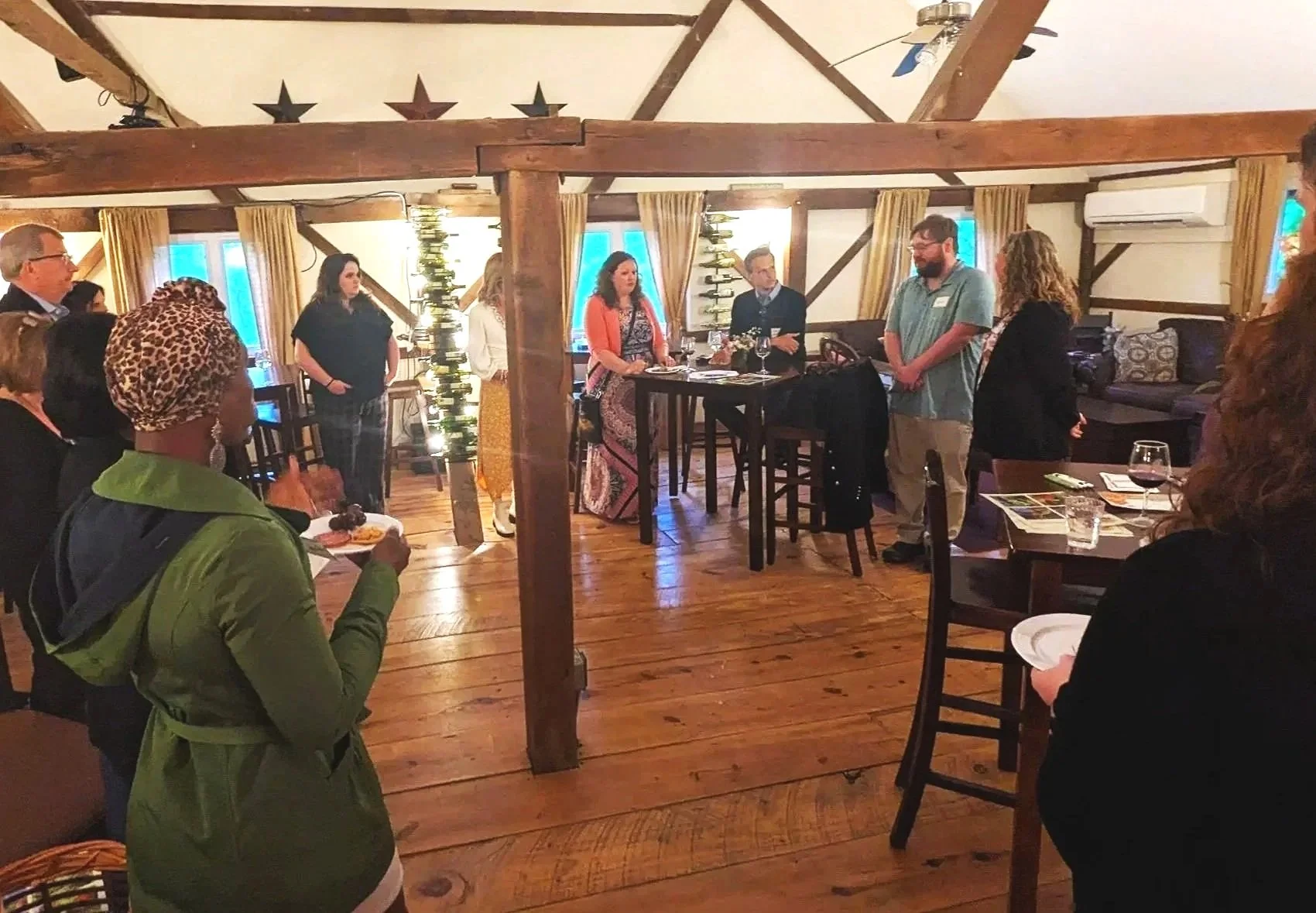
The first time I was asked to speak for Legacy, it was in the upper loft of a large barn at a winery that had been repurposed into a visitor center. I was out of my element–surrounded by people in fancy clothes–and I didn’t know anybody at the event except Laurie, our Executive Director, and Sapna, our Director of Development. I spent most of the evening downing an excessive amount of crackers, cheese, and chocolate. At a gathering such as this, I find myself most comfortable next to the snacks.
I was not only there speaking for Legacy for the first time, I was also the only apprentice speaker. I was asked to speak from the heart, to say specifically what my experiences had been coming into the farm. The speech I gave was something like this:
“I graduated college in 2023 with a bachelor’s in English and promptly could not get a job. It’s hard to get a job these days, and even harder as an autistic person. I applied to dozens of places, met with job coaches, planned out my resume, and waited. I never received any response.
Legacy were the people who gave me a chance. They were the people who were interested in my ability to write, and who were willing to let me write for them. With the start of their media program, I have been able to write professionally for the first time and to actually use my skills in a real job. And I’m so grateful for that. It’s been such a blessing to be here.”
I went on to describe my current projects at the time: the profile pieces I was beginning on other apprentices and mentors and also this very blog. I finished the speech with words I can’t remember. It was only later that I fully understood why my speech-giving was so important.
My story directly demonstrates that the mission of Legacy Farms matters. We do provide jobs and foster job growth for neurodivergent people. My genuine enthusiasm for being a representative of our media program–a program in which I get to use my skills and natural talents–is proof of the purpose of having a media program.
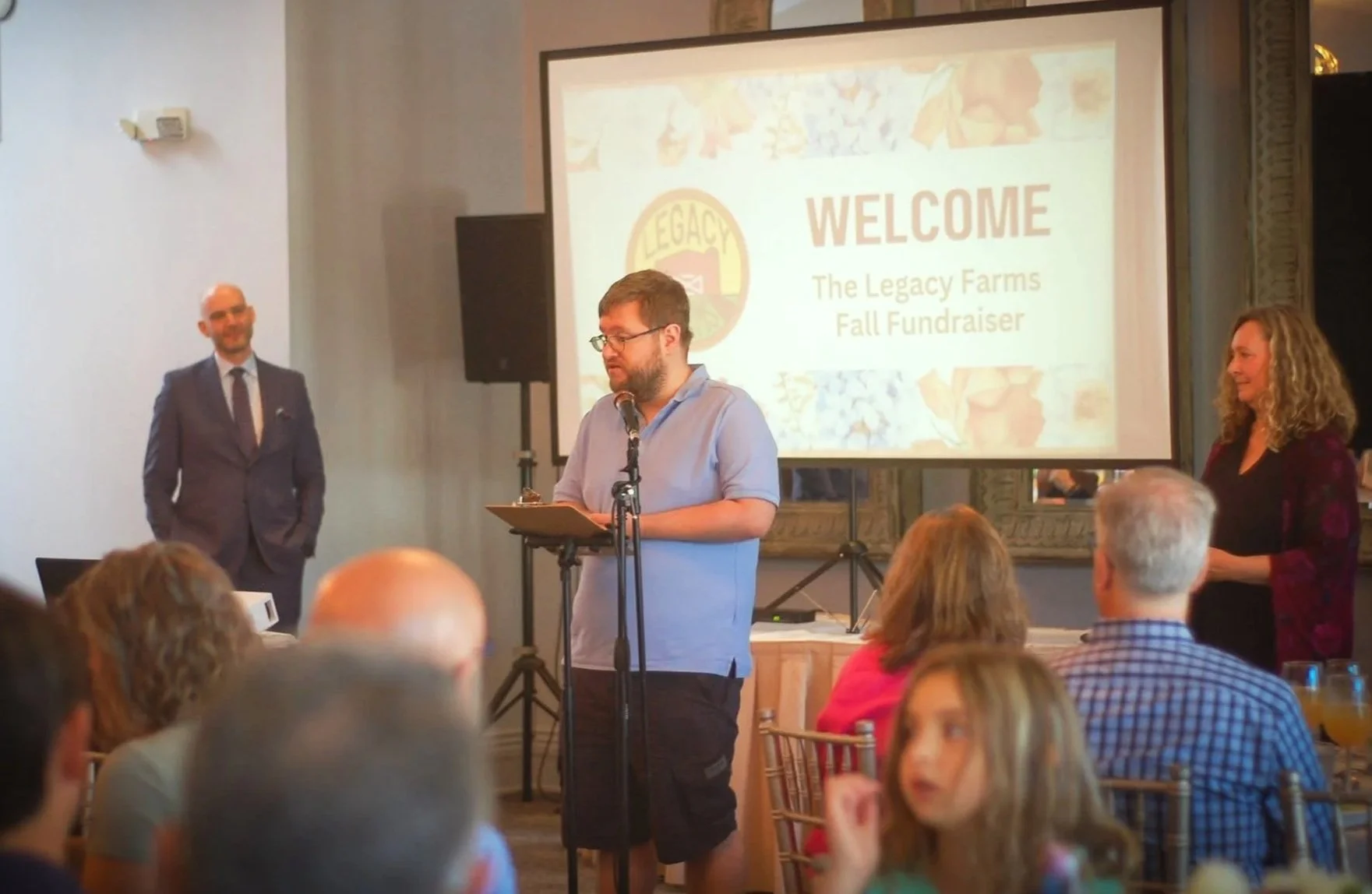
Photo by Heather Overheu
I also spoke at a Summer gathering, and at our Fall Fundraiser in early October. I smiled and nodded through the small talk and fancy food that was not especially to my taste. I have as much trouble adapting to unfamiliar foods as to unfamiliar social situations.
But I tolerated the social situations because it is as important as sticking my finger into the soil to make room for a baby plant–something I also thought I didn’t want to do when I first began at Legacy. And recently at the garden I have been helping with the planting of our over-winter crops; the flowers that prefer the cold and bloom in the spring.
When I am in the garden, I am planting snapdragons. But when I am in front of a crowd, I speak to plant another kind of seed–seeds of support for our mission–while knowing that my voice is as important to helping the farm as my hands.
———
Thank you for reading! When you support Legacy Farms through donations and floral purchases, you nurture all of our apprentices' work and growth...our gardeners, aspiring photographers and entrepreneurs, and writers like James! Each program we offer and every flower we grow is part of something bigger.
Legacy Farms provides vocational training and meaningful work experience for neurodivergent young adults — building pathways to confidence, independence, and community connection.